Pope Leo XIV remains in charge during surgery in Vatican City
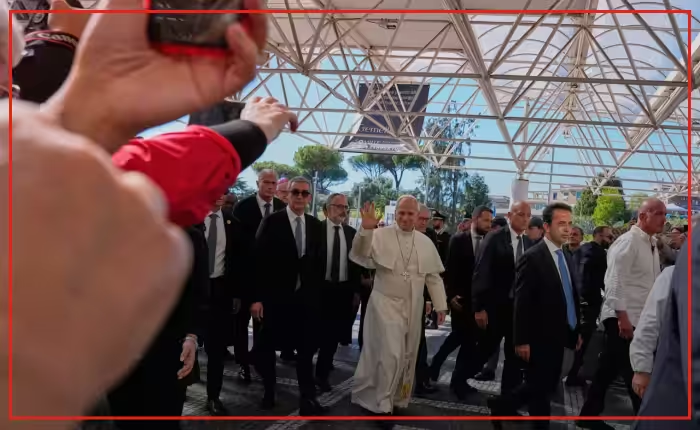
Pope Leo XIV retains full authority over the Catholic Church during his Tuesday medical procedure in Vatican City. No legal provisions transfer his supreme power while he is sick or under general anesthesia. He arrived Tuesday afternoon at Rome’s Gemelli hospital for surgery to remove a lung nodule.
Leo will stay at the hospital for an expected weeklong period. The Vatican maintains detailed rules to transfer power only when a pontiff dies or resigns. None of those legal norms apply when a pontiff becomes sick or unconscious.
Church canon law defines the pontiff as the successor of the Apostle Peter and the Vicar of Christ. He also serves as the head of the college of bishops and the pastor of the universal church. Nothing changes in his status since his election as the 267th pope on May 8, 2025.
A team of officials already handles the day-to-day administration of Vatican City. These officials operate regardless of whether the pontiff is conscious or present in the Apostolic Palace. Cardinal Pietro Parolin serves as the chief official in his role as Vatican secretary of state.
Parolin spoke at a nearby conference on Tuesday rather than remaining at the Vatican. He stated that he spoke with the pontiff on Monday night and felt reassured.
“We were all struck by the serenity with which the pope announced this procedure,” Parolin said. “Am I worried? Yes, because I certainly didn’t expect something like this.”
Vatican operations continued normally on Tuesday, including the announced appointments of two new bishops. Canon 412 permits a standard diocese to be declared impeded if a bishop faces incapacity or exile. That rule transfers diocesan governance to an auxiliary bishop or a vicar general.
Canon law lacks explicit instructions for an incapacitated bishop of Rome. Canon 335 states that nothing can alter church governance when the Holy See is vacant or entirely impeded. The rule does not define what creates an entirely impeded Holy See.
Previous pontiffs prepared conditional letters of resignation in case of severe illness. Pope Paul VI wrote letters in 1965 asking cardinals to accept his resignation if he faced progressive incapacitation. Pope Francis confirmed in 2022 that he wrote a similar letter for medical incapacitation.
Canon law requires that any papal resignation must be freely and properly manifested. Pope Benedict XVI fulfilled that canonical requirement when he stepped down in 2013.
Cardinals Manage Interregnum Periods Only After Death
Papal governance changes hands only when a pontiff dies or formally resigns. The resulting period between pontificates is known as the sede vacante. Cardinal Kevin Farrell serves as the camerlengo and manages Holy See property during such transitions.
A camerlengo holds no authority to govern when a pontiff is merely ill. Farrell presided Tuesday over a family ministry conference in Vatican City that the pontiff previously attended.
The Holy See functions as the central governing body of the global Catholic Church. Canon law serves as the internal legal system that regulates church offices, dioceses and official transitions. A papal conclave represents the formal gathering of cardinals assembled to elect a new supreme pontiff.
Leo delegates administrative matters to staff while retaining sole supreme jurisdiction. He continues to hold full authority throughout his medical care.