Solar kits power disaster relief and refugee camps in Teknaf
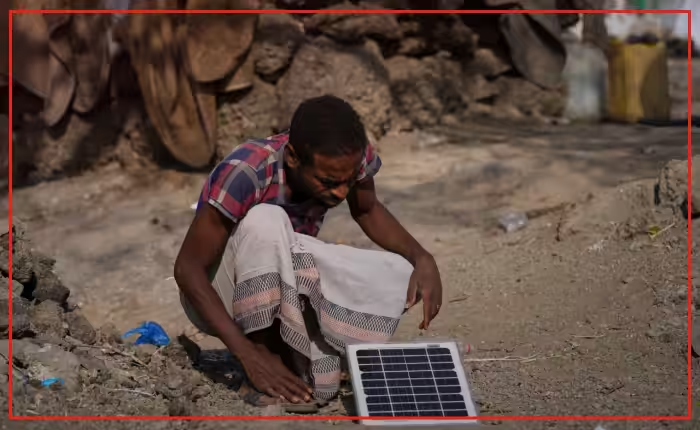
Mohammed Saber uses a small solar panel to power his family home in Teknaf. The humanitarian aid package provides electricity for daily cooking, phone charging and cooling fans.
Saber, 35, received the portable unit six years ago as humanitarian aid. He fled Myanmar with his family during a military crackdown in 2017.
“We can now charge our phones, cook with light, children can study at night and use fans during the hot season,” Saber said.
Experts say renewable power is growing across emergency response zones. Relief groups increasingly treat power access as a basic human need.
Clean power is needed as extreme weather intensifies. Conflict and sanctions also keep traditional fuel prices volatile.
Clean power spreads to emergency zones
Portable systems do not rely on local utility companies. They remain easy to move and recharge quickly during crises.
“In emergency situations, solar kits can be deployed immediately,” said Sarah Rosenberg-Jansen, a fellow at the Stockholm Environment Institute.
She noted the setups help when floodwaters rise fast or road networks suffer heavy damage. The gear includes lanterns, home power packs, torches, heating pads and electric cookers.
Panels avoid the sudden price spikes seen with petroleum products. Fuel shipments to emergency regions often become difficult and expensive.
Mass factory production lowered prices over recent decades. The hardware also became much simpler to operate.
Yuriy Boyechko leads Hope For Ukraine, an aid group based in the United States. His group delivers systems to families caught in conflict.
“We have grandmas and grandpas who are around 75-80 years old … receiving kits,” Boyechko said. “It’s just a matter of plug (in) and play.”
Other facilities worldwide rely on clean power options:
- A tuberculosis clinic run by Doctors Without Borders outside Karachi, Pakistan.
- Water filtration units run by the U.N. migration agency in Renk county, South Sudan.
- Relief supplies distributed by SolarBuddy and local groups in Nepal.
Nepal suffered massive August floods. The disaster killed 1,455 people and left 5,285 missing.
Funding limits slow global field adoption
Logistical hurdles still slow adoption in emergency sectors. Mark Gibson of Global Platform for Action said aid groups rely heavily on diesel equipment under long agreements.
Agencies must build unfamiliar delivery chains in difficult regions. Cuts in donor budgets also harmed progress, according to program leader Aimee Jenks.
“Much of the technical expertise in the humanitarian sector on energy has been cut,” Jenks said. “That’s now retracting a lot of progress.”
Boyechko said his group expects to distribute over 3,200 kits by the end of 2026. Limited funding stretched that effort over two full years.
“We have a waiting list of about 20,000 families,” Boyechko said. “We just cannot keep up with demand.”
Teknaf hosts massive settlements along the southern border of Bangladesh. Humanitarian groups manage shelters and distribute aid supplies to displaced residents.
More than 1 million Rohingya refugees live in Bangladesh. Saber said the basic hardware continues to help his family.
“It’s improved my family’s life,” he said.