Chubu Electric execs resign over falsified reactor quake data
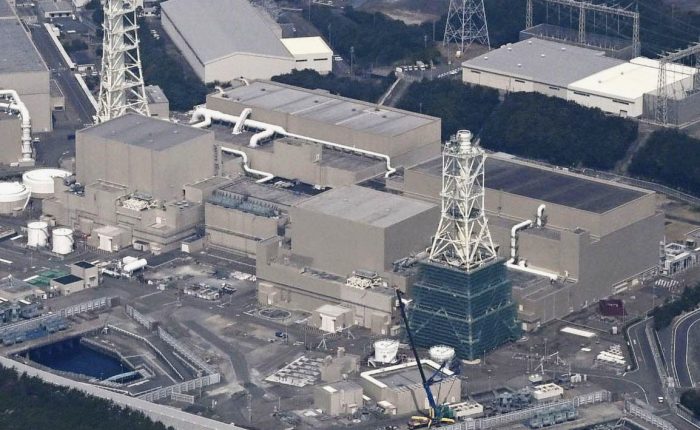
The president of Chubu Electric Power Co. said Monday that he and the chairperson are resigning to take responsibility over the utility’s yearslong manipulation of earthquake safety data for two nuclear reactors. The operator will also withdraw its applications to restart those reactors, the president said.
Japan has been gradually restarting some of the 54 nuclear reactors it shuttered in 2011 after the Fukushima disaster. A 9.0 earthquake off Japan’s northeastern coast and a subsequent tsunami caused meltdowns at three reactors operated by Tokyo Electric Power Company Holdings, or TEPCO.
Chubu Electric President Kingo Hayashi said an outside investigative panel found that the utility had for years provided manipulated seismic data for its Hamaoka No. 3 and No. 4 reactors to ensure the figures met requirements.
With the credibility of the safety data in serious question, the utility has decided to drop the pending restart application for the two reactors, Hayashi said.
“We had serious problems with our corporate culture and governance,” Hayashi said. “Regaining public trust is our top priority.”
Hayashi and chairperson Satoru Katsuno were not directly linked to the data manipulation. But the top management set early resumption as a key business target and harshly reprimanded a team working on a resumption permit because of the prolonged screening, which might have pressured them into wrongdoing, the report said.
Hayashi and Katsuno will officially step down on Sept. 30. Director Minoru Yasui will be promoted to president on Oct. 1.
Chubu Electric applied for safety screening to resume operations at the No. 3 and No. 4 reactors at the Hamaoka plant in 2014 and 2015. The Nuclear Regulation Authority suspended their screening in December after months of internal investigation based on a tip from a whistleblower.
Two other reactors at the plant are being decommissioned, and a fifth is idle.
Hayashi said nuclear power generation remains an important energy supply and that the utility will reapply for restarts of the No. 3 and No. 4 reactors after implementing preventive measures, restructuring and making a fresh start.
Of Japan’s 54 commercial reactors, 11 are currently in operation, 20 are offline and more than 20 others are being decommissioned, according to the Nuclear Regulation Authority.