American road trips lost something to interstates and airfare
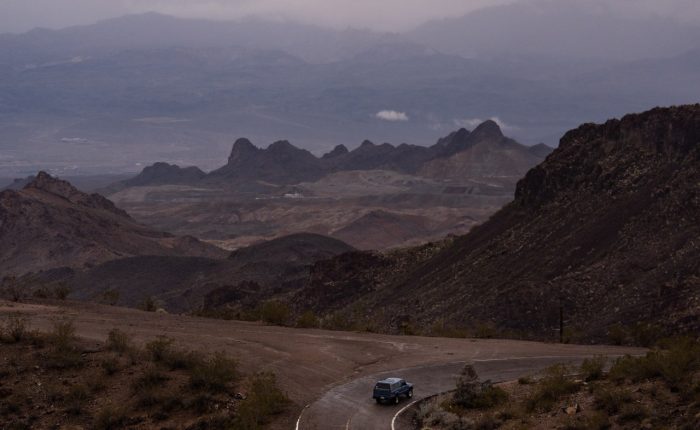
The American road trip, long celebrated in books and film, is being reshaped by the very infrastructure that enabled it. Cheap airfare and an interstate highway system built for speed have pulled travelers off the older two-lane roads, replacing small-town stops and chance encounters with chain stores and highway interchanges.
The decades after World War II were the high point of the family road trip, according to historian Susan Rugh, author of “Are We There Yet? The Golden Age of American Family Vacations.” More Americans were entering the middle class, many had paid vacation for the first time, car ownership was rising rapidly, and the federal government was investing in highways that made long-distance driving more comfortable.
“The experience is totally different,” said Allen Pietrobon, a professor at Trinity University in Washington, D.C., who teaches a course on road trips. “It’s not carefree. You can’t just, whenever you need gas, stop wherever you want because the gas station may not serve you.”
Black families faced segregation along the way, even outside the South. Some national parks maintained separate campgrounds for Black families, and guidebooks, including the Green Book, listed hotels and restaurants where Black travelers would be welcomed. Rugh writes that the obstacles faced by vacationing Black families helped build support for the 1964 Civil Rights Act.
“In the face of Jim Crow laws in the South and persistent racial discrimination in the rest of the nation, the cultural icon of the family vacation was offered as persuasive evidence of the need for a federal law to ensure the rights of all citizens,” Rugh writes.
The open road also drew entrepreneurs. Wigwam Village motels, shaped like giant concrete teepees, and roadside attractions such as the world’s largest nutcracker sprang up along highways. Route 66, commissioned in 1926 and fully paved by the late 1930s, ran between Chicago and Los Angeles and catered to a mid-century craze for the Old West. Bobby Troupe’s 1946 hit “(Get Your Kicks on) Route 66,” first recorded by Nat King Cole, outlasted any advertisement for the road.
John Steinbeck called Route 66 the “Mother Road.” The construction of the interstate system diverted traffic away from the communities it once served, and many roadside businesses closed.
The interstates, designed for speed and convenience, largely bypassed the small towns that had been part of the journey itself. Chain-store gas, food and lodging now sit right off the exits, and airplane travel eliminates even the limited local interaction the interstates provide.
“We traded the the opportunity to make unexpected discoveries and encounter and engage with small-town America,” said Richard Ratay, author of “Don’t Make Me Pull Over! An Informal History of the Family Road Trip.” “We traded those experiences for the speed and convenience of getting to our final destinations.”
Ratay recalled the value of those older encounters on the road.
“In meeting so many folks from different places, it gave families traveling by car the opportunity to realize that Americans in different areas of the country may talk a little different, they may dress a little differently, they may eat different foods, but when all is said and done, we aren’t that different after all,” Ratay said in an interview.
Some of the misadventures along the way became the most memorable parts of the trip. Ratay’s book opens with his family’s car spinning off an icy road and down an embankment when he was a child, hours spent waiting in the cold, and a tow truck at the end of it.
“Years later, we’d all agree it was the best start to a family road trip ever,” he writes.
Pietrobon recalled a coworker’s car accident in a tiny Nevada town on a Saturday afternoon, with nothing open and no rental cars available until Tuesday. The stranded travelers ended up having what he described as a really amazing experience.
“The whole purpose now of higher end travel is to eliminate any friction whatsoever,” Pietrobon said. “And we do lose something in that, I think.”
Many older roadside motels, restaurants and attractions folded when the interstates went in. Rugh, the historian, suggested travelers seeking the old experience still have options.
“Get on one of those old highways anywhere,” Rugh said. “Go through Illinois and go on the Lincoln Highway, cross the Midwest on the Lincoln Highway. Go from Arizona to Canada on Highway 89, Highway 1 in California.”
Pietrobon said the older travel narratives treated the destination as almost beside the point.
“I think about who’s going to be the next Jack Kerouac where, you know, the journey is what he’s writing about, not just the snapshots of when you stop for the day,” he said.