Texas senators question renewing Brightstar Lottery contract
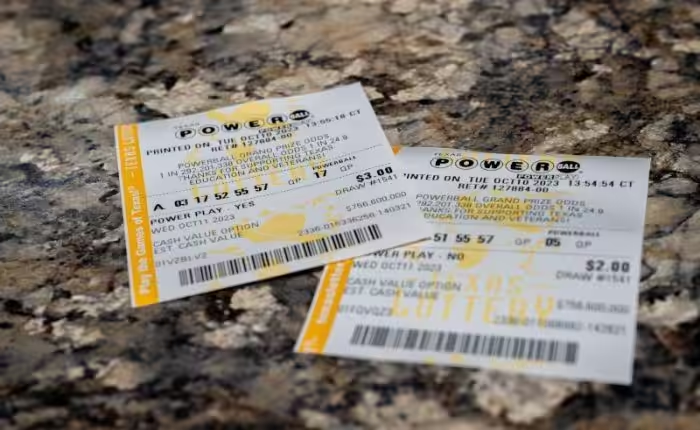
Texas senators this week pressed state regulators about renewing the contract of a lottery vendor whose company has been accused of profiting from an alleged scheme to rig a $95 million Lotto Texas jackpot. The vendor, Brightstar Lottery, is bidding to continue serving as a state contractor even as senators questioned whether it should remain in the role.
More than 18 months after his first appearance at the Capitol, Houston-based attorney Manfred Sternberg returned to Austin to testify before the Texas Senate Committee on State Affairs. He told lawmakers he represents a group of victims harmed by the alleged conspiracy surrounding the April 2023 drawing. Sternberg said he has filed and later withdrawn a class action lawsuit against multiple entities and people, including Brightstar.
Gary Grief, the former director of the Texas Lottery Commission, was indicted by a Travis County grand jury for abuse of official capacity in connection with the drawing. He is scheduled to appear in court Oct. 16 for a bond hearing.
Sternberg and State Sen. Bob Hall, R-Edgewood, allege an entity called Rook TX purchased millions of lottery tickets to nearly guarantee a winning ticket on the $95 million jackpot. The pair alleges Texas Lottery Commission officials helped four retailers obtain dozens of lottery terminals that printed out millions of tickets in a 72-hour period. Brightstar Lottery is responsible for delivering and servicing those terminals, according to Sternberg and Hall.
“IGT not only watched it go down, they helped it go down,” Sternberg told lawmakers. He said the company earned $700,000 on commission from ticket sales involved in the drawing.
Sternberg pointed to three letters from the Texas Lottery Commission stating that tickets sold at certain retailers in the April 2023 drawing were invalid. “They made over a half-million dollars on this invalid game that the lottery commission itself says is invalid, they made $700,000,” Sternberg said. “Has anyone asked for that money back? I don’t think so.”
Brightstar, formerly known as IGT, denies any wrongdoing. Mike DeAngelis, senior director of corporate communications for Brightstar, said in a statement that in 2023 the company provided hardware, software and support services at the direction of the Texas Lottery Commission.
“As such, we’re required by contract to service licensed retail entities, including the installation of lottery terminals and the delivery of paper stock and supplies as directed by the Lottery,” DeAngelis said. He added that the company continues to fulfill its contract requirements under the direction of the Texas Department of Licensing and Regulation.
The Texas Lottery Commission was dissolved by Senate Bill 3070 in 2025, and lottery regulation moved to TDLR. That bill directed TDLR to extend Brightstar’s contract for no more than two years, running through August 2028. Hall authored that bill. His chief of staff, Amy Lane, said the extension was meant “to allow time for the procurement and potential implementation process of a new contractor,” adding that a new vendor would need preparation time. Lane also said Hall plans to push to abolish the Texas lottery altogether during the 90th legislative session, which begins next January.
TDLR is currently soliciting bids for lottery operations. Hall and Sen. Charles Perry, R-Lubbock, warned TDLR officials against extending the Brightstar contract.
“We have to be very careful about their role going forward, because this could not have happened without that support contractor being involved, providing the machines, providing the tickets,” Hall said.