New Mexico governor demands accountability over DEA fentanyl tactics
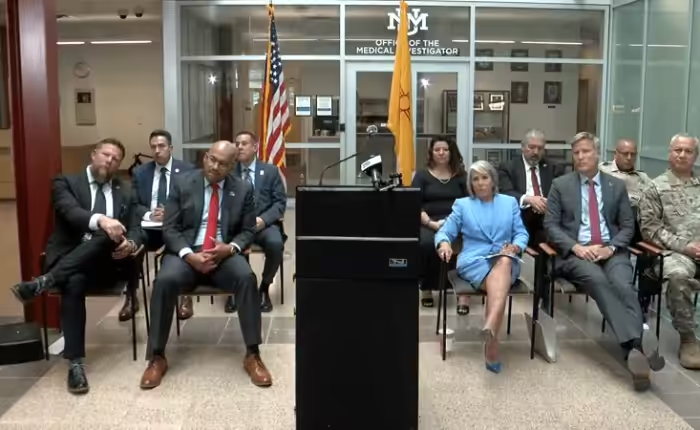
New Mexico Gov. Michelle Lujan Grisham and other state leaders demanded accountability Monday from federal officials over a reported Drug Enforcement Administration operation they say allowed thousands of fentanyl pills to reach New Mexico streets between 2023 and 2025. The governor, standing with local law enforcement leaders at the state Office of the Medical Investigator in Albuquerque, called the tactic a “stunning failure of the federal government.”
“We’re outraged,” Lujan Grisham said. “This is a stunning failure of the federal government.” She went on to call it “the most derelict, despicable act in my long career.”
The governor’s remarks followed an Associated Press report outlining a whistleblower’s testimony that DEA tactics allowed fentanyl to be distributed in Albuquerque to build cases. Lujan Grisham said the agency “stood silently by and watched thousands of fentanyl pills get distributed with no arrests, no effort, no notice that we know of to anywhere else.”
New Mexico Attorney General Raúl Torrez has launched an investigation into the DEA’s fentanyl operations. While federal agents have broad legal protections, Torrez said his office will search for evidence that would warrant criminal prosecution, civil litigation or structural relief.
The DEA has said its agents acted lawfully, professionally and within policy. The agency is requesting an independent review of its actions in response to the claims.
Major General Miguel Aguilar of the New Mexico National Guard said the strategy to hold illicit distributors and cartels accountable is critically important. “But that accountability should never come at the sacrifice of the safety of more Americans or New Mexicans by allowing lethal pills to reach our streets,” Aguilar said.
House Speaker Javier Martinez, a Democrat from Albuquerque, described the situation as a systemic failure. “These are decisions made on our behalf by our federal government,” Martinez said. “Decisions that put our families’ lives at risk.” He added: “No investigation is worth one life. I don’t care who it was, Biden, Trump, whoever; it is a systemic failure.”
Albuquerque Mayor Tim Keller called fentanyl the top challenge facing the city. “This is absolute betrayal by our federal government,” Keller said. “Now we know why the harder we work, the worse the problem gets.”
Numbers presented by the New Mexico Department of Health showed roughly 44,000 people in the state suffered from opioid addiction in 2020, a figure that nearly doubled to 83,000 by 2024. The upward trend is continuing this year, according to the department.
“Somebody must pay,” Lujan Grisham said, calling for accountability for practices she said have contributed to overdose deaths and put the public at risk.
Raul Bujanda, executive director for public safety for the City of Albuquerque, said the difference in New Mexico investigations is that “true law enforcement would make sure that they take the steps necessary to make sure we save lives.”
“New Mexico deserves justice; they deserve answers, they deserve to be compensated in a number of ways,” Lujan Grisham said.
Former New Mexico U.S. District Attorney Alex Uballez, who would have overseen the operations at the time, said the 2023 complaint was investigated by the DOJ Office of Professional Responsibility in 2024 and the independent Office of Special Counsel in 2025. Both agencies closed the matter without action, with OSC concluding it was “Totally unsubstantiated,” according to a statement Uballez provided.