EU proposal for Canada’s associate membership doesn’t yet exist, critics say
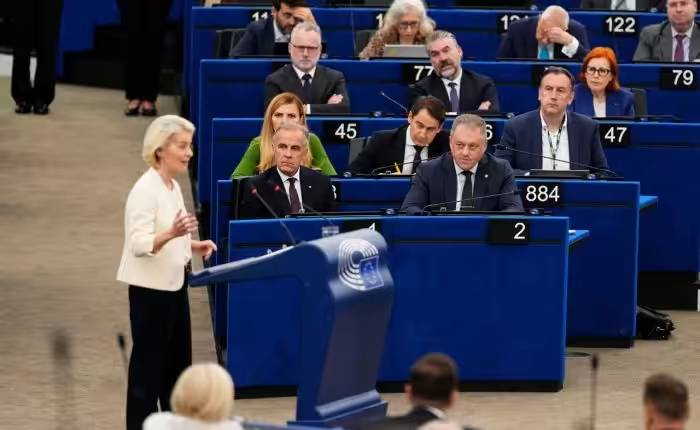
European Commission President Ursula von der Leyen this week proposed that Canada become the first “associate member” of the European Union, but the status does not yet exist. Prime Minister Mark Carney welcomed the invitation, though he made clear Canada is not seeking full membership in the bloc.
While “associate membership” remains undefined, Association Agreements do exist. More than 20 countries, including Albania, Israel and Ukraine, have such treaties with the EU. Those agreements cover trade and security and are seen as an important step toward membership. It is unclear how von der Leyen’s proposal would differ, or whether Canada would have to agree to such a treaty first.
Any decision on enlargement or formal relations with outside countries requires the unanimous approval of all 27 EU member countries, and von der Leyen did not consult widely before making the proposal. Getting all 27 behind such a vague offer will pose a major challenge.
Even among EU governments open to closer ties with Canada, there are reservations. German government spokesperson Stefan Kornelius said Berlin welcomes the idea but has concerns about the name attached to the new relationship.
“We are open to discussing new partnership models,” he said after von der Leyen’s speech. “But we should rethink the concept, the title that is connected with this.”
German Chancellor Friedrich Merz in May urged the EU to consider offering associate membership to Ukraine. Ukraine is seeking full membership and has been at war with Russia for more than four years.
Helen McEntee, Ireland’s foreign affairs and trade minister, said the Irish government, which holds the EU’s rotating presidency, was ready “to explore associate membership for Canada.”
David McAllister, chair of the European Parliament’s Foreign Affairs Committee, was more cautious, saying the proposal’s “concrete terms now need careful assessment.”
Carney said Canada would work to define the broad lines of the new alliance, pointing to the EU-Canada summit in Montreal on Oct. 29-30 as a starting point.
“What matters is the substance. What are we actually building together, how do we combine our strengths in a way that serves our people better, protects our fundamental rights and creates prosperity,” Carney said at the European Parliament.
He added: “Canada is not in a position, nor seeking, to become a full member of the European Union.”
Canadian overtures to the EU come as Carney is locked in a trade war with U.S. President Donald Trump. Trump suggested that allowing Canada to become an associate EU member could be a “hostile act” and threatened heavier tariffs on Europe in response.
Carney insisted Canada is not seeking to build “a great power rival, only with better manners.” Neither he nor von der Leyen mentioned Trump by name in their speeches.
Fabian Zuleeg, chief executive at the European Policy Centre think tank, said Trump’s response showed the new EU-Canada partnership matters. Zuleeg added that the substance of the relationship is more important than its label.
“The label must now be filled with concrete substance, not remain another announcement,” Zuleeg said.