Nearly 200 veterans run in Russia’s State Duma election, most set for little real power
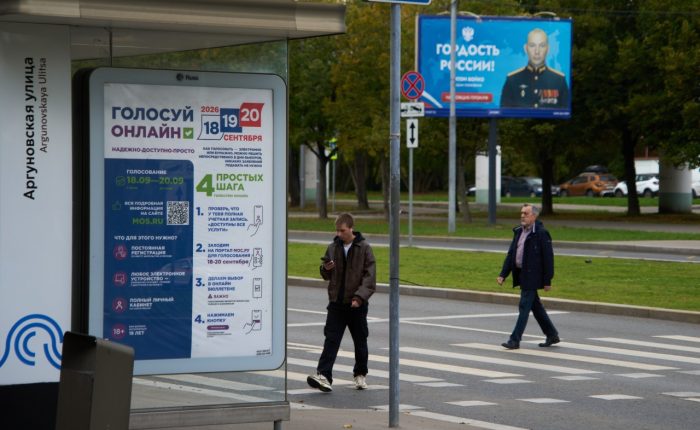
Nearly 200 candidates in Russia’s parliamentary election have served in Ukraine, but few analysts believe most of them will hold any real power. The Kremlin is promoting the veterans as part of its effort to show that those who fought in the 4 1/2-year war will have an honored place in civilian life.
The vote that begins Friday for the State Duma, the lower house of parliament, is the first since the war began. Election officials say nearly 200 candidates have served in Ukraine, and most Kremlin-aligned parties on the ballot have candidates identified as participants in the SVO, the Russian acronym for the “special military operation.”
One prominent candidate is Vladislav Golovin, 29, of the ruling United Russia party, who fought in the battle for the Ukrainian port city of Mariupol and lost part of his leg. He has appeared at events with President Vladimir Putin, who made him a Hero of Russia, the country’s highest honor.
In 2024, Golovin took part in Putin’s “Time of Heroes” program that prepares veterans for government careers. He now heads a military and patriotic youth organization, the Young Army, and has been put on Western sanctions lists.
United Russia has several dozen candidates with a Ukraine war background. Another leading candidate is Yevgeny Poddubny, a state TV war correspondent who was wounded by a Ukrainian drone.
The ultranationalist Liberal Democratic Party has a top candidate in Alexei Vereshchagin, who is described as having joined the Moscow-backed separatist insurgency in eastern Ukraine in 2014 and leading a brigade of volunteers.
“We are the ones our homeland has called upon to fight for the ‘Russian World,’ and we will fight,” Vereshchagin, who was born in Kyiv, said in a campaign video.
Ukrainian police in March posted a photo of what appeared to be Vereshchagin and said they were investigating him for his role in home invasions and threatening civilians in the Kyiv region in 2022 before Ukrainian forces retook the area. He hasn’t publicly commented on the allegations.
By promoting veterans in the State Duma campaign, the Kremlin wants to show potential recruits that they would be fighting “for some higher cause, and that they have bright prospects ahead of them in the form of a career lift,” said Nikolay Petrov, senior research fellow at the NEST Centre.
But Russia also “doesn’t know what to do” with those returning from the battlefield, Petrov told The Associated Press, and so it offers them largely insignificant positions with little real power, while focusing on promoting those who already held public office.
Former Putin speechwriter-turned-political analyst Abbas Gallyamov was more blunt, calling it “empty talk.”
“You need to promise them everything they want to hear, from promises of payments to flattery and stories of their special greatness, their contribution to the cause of building a new Russia,” Gallyamov told AP.
The postwar path is not simple for many veterans. Most of those who signed military contracts cannot terminate them under Putin’s 2022 “partial mobilization” decree, and those who were drafted that year have not yet been demobilized, either.
About 167,000 servicemen have returned from Ukraine, presidential administration official Sergei Novikov said in December, although Russian media reports and experts say the number is probably higher.
The competition for the Time of Heroes program is fierce and requires higher education and management experience. Out of over 65,000 applicants in 2024-25, only 168 were accepted, according to its website. Of them, some 80 were appointed to various positions on national, regional or municipal levels.
The independent Russian news outlet Meduza reported in June that at least 1,300 veterans have been appointed to government posts, were elected to local legislatures and councils, or got jobs in state-backed companies or institutions. About 850 of those had some kind of government or related experience before serving, Meduza said.
AP was unable to independently verify those findings, but reports about government officials or lawmakers serving in Ukraine and then returning to their civilian careers are common.
Duma deputy Alexei Zhuravlyov, head of the Rodina party, has reported serving at the front while keeping his seat as a lawmaker. He recently lashed out at a YouTube blogger who wondered why he’s not fighting full-time in Ukraine.
Zhuravlyov said later that he spends “more time on the front line than in the Duma.”
Tambov regional Gov. Yevgeny Pervyshov, a United Russia candidate who also was the former mayor of his native Krasnodar and did a stint as a Duma lawmaker, served in Ukraine as part of a special military unit in 2022.
The U.K. government described his unit in 2024 as having “an unusually high number of United Russia party members and sons of Kremlin VIPs.”
After a tour of less than a year, Pervyshov was accepted into the Time of Heroes program and later was appointed Tambov’s acting governor before being elected governor in September 2025.
Ivan Filippov, who studies propaganda and analyzes military and pro-war bloggers, says such examples fuel disappointment in the pro-war community, which initially was enthusiastic about Putin’s promise of a new “elite.”
“They were very happy when he said those words, but it turned out rather quickly that it’s not about (genuine) veterans,” he told AP. “They understand clearly that no one will let them into power.”
Novikov said in December that “tens of thousands” of returning veterans remain jobless, and it “forms a dangerous risk zone.”
When it comes to putting veterans in positions of power, the Kremlin naturally prefers “rational bureaucrats” who did a stint in the armed forces, said Petrov.
“The authorities don’t at all need bandits that come back from there,” he added.