Colombia deadliest for land defenders for fourth year, report finds
Colombia remained the deadliest country in the world for land and environmental defenders for the fourth consecutive year in 2025, according to a report released this week. The country recorded 39 deaths, the highest of any nation, as conflicts over land and natural resources continued to put Indigenous people and small-scale farmers at risk.
Global Witness, an environmental and human rights advocacy group, documented at least 124 killings of land and environmental defenders worldwide last year in its annual report. Latin America accounted for 85% of those deaths, with 105 killings recorded across the region. Colombia and Brazil together made up 52% of the global total.
Brazil recorded 26 killings, more than double the 12 documented a year earlier. Honduras and the Philippines each recorded 12.
Land and environmental defenders work to protect their land, natural resources and communities from threats such as mining, logging, agribusiness and other development, often by documenting environmental damage, organizing communities or patrolling territory.
More than three-quarters of those killed in 2025 were Indigenous people, small-scale farmers or Afro-descendants, according to the report. Forty-seven victims were small-scale farmers and 44 were Indigenous. Seven of the Indigenous victims were members of community guard systems established to protect their territories.
Land disputes were linked to 84 killings, more than half the global total. Mining and extractive industries were associated with 11 deaths, logging with eight and agribusiness with six.
The worldwide toll fell for a second consecutive year, but the report cautioned that the decline does not necessarily mean environmental defenders are becoming safer. The group says killings remain significantly underreported, while land disputes, organized crime and competition over resources are increasingly converging in regions where communities are trying to protect forests, rivers and ancestral territories.
Organized crime and hitmen were suspected of involvement in more than a third of killings, according to Global Witness.
Colombia
Almost half of the 39 defenders killed in Colombia were Indigenous and another 15 were small-scale farmers. Thirty-five deaths were linked to land conflicts. The advocacy group identified suspected links to organized crime in 17 killings and another five to contract killers.
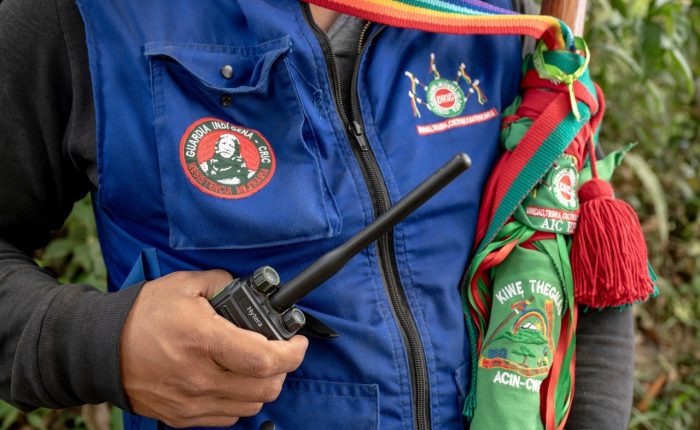
Thirteen of the killings happened in the southwestern department of Cauca, including four members of Indigenous Guard, community-led groups that patrol and protect Indigenous territories. The report documented 171 defender killings in Cauca since 2012, more than in any other Colombian department.
Astrid Torres, coordinator of the Colombian advocacy group Somos Defensores, said Indigenous authorities can come into conflict with armed groups seeking to control territory for drug trafficking and other illicit activities.
“They want to impose their order against the interests of the communities and their own authorities,” Torres said.
The region’s location near the Ecuadorian border and Pacific trafficking routes has made it strategic for armed groups involved in the cocaine trade.
Brazil
Eleven of those killed in Brazil were small-scale farmers and seven were Indigenous. Most cases involved demands for recognition of ancestral territories or land reform, with half concentrated in the Amazon states of Rondonia and Para, where illegal logging and mining, cattle ranching and agricultural expansion have contributed to longstanding land conflicts.
The increase came despite greater Indigenous participation and commitments on land rights at last year’s COP30 climate summit in the Amazonian city of Belem. Brazil announced the titling of 10 Indigenous territories during the summit, though hundreds of applications remain pending.
Brazil’s Ministry of Indigenous Peoples told The Associated Press in a written response that reducing violence against Indigenous communities requires securing their territories, combating invasions and illegal activities and holding those responsible for crimes accountable. It said the government has resumed demarcating Indigenous lands and has carried out operations to remove outsiders from 12 territories, benefiting more than 67,000 Indigenous people.
Among those killed was Vicente Fernandes Vilhalva, a 36-year-old member of Brazil’s Guarani Kaiowa Indigenous people who was shot during an armed attack on his community in Mato Grosso do Sul in November. His community has been involved in a long-running struggle to reclaim ancestral territory.
Other regions
Killings were documented across 15 countries in 2025. Asia accounted for 12% of the global total, with the Philippines recording the highest number outside Latin America at 12. The report said five killings in the Philippines involved suspected participation by the military amid counterinsurgency operations.
In Africa, three killings were verified, two in Tanzania and one in the Democratic Republic of Congo. The report cautioned that armed conflict, restrictions on civil society and insecurity make attacks especially difficult to document there.
In Congo, journalist Fiston Wilondja Mazambi was found dead in Bukavu after investigating alleged illegal gold mining by the Rwanda-backed M23 rebel group.
Killings were also documented in India, Indonesia, Turkey, Guatemala, Ecuador, Nicaragua and France.
Community-led protection
The report focuses on community-led protection strategies being adopted as Indigenous groups respond to threats that governments have often failed to contain. They include territorial patrols, early warning systems and community monitoring networks.
In Peru, where four defenders were killed last year, the report highlights the Kakataibo Indigenous Guard, whose members patrol Amazonian territory threatened by illegal coca cultivation and organized crime.
“Defending our territory is important to us as a community and as a people, and we’re proud to support the climate that we all depend on,” Segundo Ispón, commander of the Kakataibo Indigenous Guard, said in a statement. “But for this next generation coming up, the work is more dangerous than ever.”
Global Witness documented 142 killings and four disappearances in 2024 and 196 killings in 2023. Since the organization began tracking such cases in 2012, it has documented 2,375 killings and disappearances of land and environmental defenders.