Pope Leo XIV remains in charge during surgery in Vatican City
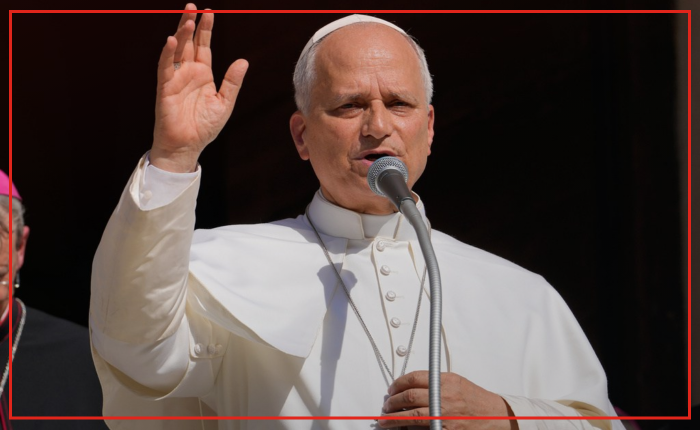
Pope Leo XIV retains full authority in Vatican City as he undergoes surgery on Tuesday. Church law includes no mechanism to transfer power during a temporary medical incapacity.
He arrived Tuesday afternoon at Rome’s Gemelli hospital. The hospital stay is expected to last one week. Doctors will remove a nodule on his lung.
Nothing changes in his power since his election on May 8, 2025. He is the 267th pope. He stays in charge under general anesthesia.
Leo delegates the daily running of the church to a team of officials. Chief among them is Vatican Secretary of State Cardinal Pietro Parolin. Parolin spoke Tuesday at a nearby conference.
We were all struck by the serenity with which the pope announced this procedure.
Parolin said he was worried because he did not expect such news. He spoke with the pontiff Monday night. He told reporters he felt reassured.
It’s something that, thank God, we noticed right away. And normally, when these things are caught in time, they can be resolved. But these are, as the pope said, God’s surprises.
Vatican operations continue normally this week. The Vatican announced two new bishop appointments on Tuesday. Officials made slight modifications for events Leo was expected to attend.
Canon law has no rules for an incapacitated pontiff
Church law has provisions for an incapacitated diocesan bishop. Canon 412 states a diocese can be declared impeded due to captivity, banishment, exile or incapacity. Daily governance then shifts to an auxiliary bishop or a vicar general.
No explicit provision exists if the pope becomes impeded. Canon 335 states nothing can be altered when the Holy See is vacant or entirely impeded. The rule does not define what entirely impeded means. It also provides no instructions for that state.
Past pontiffs prepared private instructions. In 1965, Pope Paul VI wrote letters to the dean of the College of Cardinals. He wrote that cardinals should accept his resignation if he became seriously ill.
Paul worried popes could suffer strokes or dementia. That letter was never invoked. Paul died on the job 13 years later.
Pope Francis confirmed in 2022 that he wrote a similar resignation letter. He wrote it shortly after his election. Francis said he gave it to Cardinal Tarcisio Bertone.
Francis assumed Bertone delivered the letter to Parolin upon retiring. The text was never made public. The conditions Francis contemplated are unknown.
It is not established whether such a letter would be canonically valid. Canon law requires a papal resignation to be freely and properly manifested. Pope Benedict XVI resigned under those terms in 2013.
Papal power shifts only upon death or resignation
The only transfer of papal power happens when a pope dies or resigns. Rites and rituals govern the interregnum period between pontificates. That period is known as the sede vacante.
The camerlengo manages the administration and finances during that period. He certifies the death. He seals the papal apartments and prepares the burial before a conclave.
Cardinal Kevin Farrell holds the position of camerlengo. Farrell also leads the Vatican laity office. The camerlengo has no duties when a pope is sick.
Farrell is currently presiding over a Vatican conference on family ministry. Leo attended that gathering before his sudden hospitalization in Rome.
Canon law sets the internal legal code that governs Catholic Church administration worldwide. The Holy See operates as the sovereign central government of the global church. Church rules reserve all supreme executive, legislative and judicial authority to the Roman pontiff.
The universal church continues normal operations under Leo’s established administration.