Saudi Arabia investigates air defense failure in deadly Riyadh airport attack
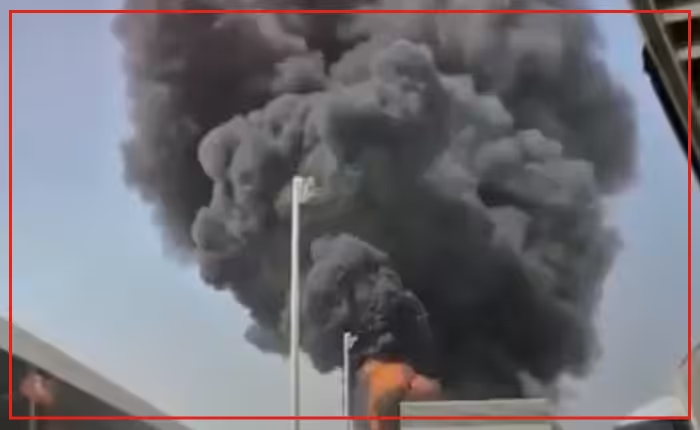
Saudi Arabia opened an investigation after air defenses missed an aerial assault on Riyadh, regional officials said Monday. The strike killed at least 13 people and wounded more than 300 at the capital airport. The incident raised questions about why defense systems failed to provide earlier warning.
Two regional officials spoke on condition of anonymity because they were not authorized to comment publicly. They said the initial probe showed Yemen’s Houthis first launched multiple drones. Those drones paved the way for cruise and ballistic missiles to reach King Khalid International Airport.
The Houthis possess advanced systems fitted with warheads that can change direction during flight. These weapons pose a challenge to Patriot interceptors used by the Saudis. The missiles and drones flew over 1,000 kilometers, or 621 miles, to reach their targets.
Probe follows fatal strikes
The Saudi government-run Center for International Communication did not immediately respond to a request for comment. It oversees foreign media.
Saudi state-run media reported Monday that the military was responding to a new attack involving drones and cruise missiles. Officials provided no details about that incident. Riyadh airport remained closed on Monday. Workers in the capital city financial district were told to work from home.
Houthi officials said Saudi Arabia carried out new strikes Monday on the Yemen capital of Sanaa. Those strikes killed one person and wounded 12. The rebels had seized key areas along the Bab el-Mandeb last month. A Saudi-led coalition backing forces with Yemen’s internationally recognized government has tried to seize them back.
Regional tensions mount
The Saudis want the U.S. to become directly involved in fighting the Houthis. The U.S. has provided intelligence sharing, target identification and planning for a Saudi-led offensive. It has held off on carrying out direct strikes.
U.S. President Donald Trump spoke to reporters on Saturday. He said he was looking at the possibility of carrying out U.S. attacks against the Houthis.
A U.S. intervention could prompt the Houthis to try to halt shipping through the Bab el-Mandeb Strait. The flow of Mideast oil is already complicated by Iranian efforts to choke off the Strait of Hormuz. About one-fifth of global oil flowed through that waterway before the U.S.-Iran war started in late February.
The Saudis continued Monday with the World Petroleum Congress in Riyadh. More than 70 ministers, over 300 CEOs and leaders from more than 25 international energy organizations confirmed participation.
Anwar Gargash, a diplomatic adviser to the rulers of the United Arab Emirates, called Monday for joint Gulf action. He wrote on social media that attacks on Saudi Arabia undermine the security of the UAE and all Gulf states.
It has become clear that we are all targeted, and that our security is indivisible.
Iran’s Foreign Ministry expressed concern Monday about the fighting. Spokesman Esmail Baghaei said Iran is ready to help resolve disputes through diplomacy. He said Foreign Minister Abbas Araghchi spoke by phone Sunday with Saudi Foreign Minister Prince Faisal bin Farhan Al-Saud.
Former U.S. Secretary of State Mike Pompeo spoke at a conference in Abu Dhabi on Monday. He said the strikes showed the U.S. has not yet achieved deterrence.
What it does demonstrate is that we’ve not yet achieved deterrence. We collectively have not yet achieved deterrence.
He added that the Iranian regime must be crushed.
Patriot missile systems are air defense batteries designed to track, target and intercept incoming ballistic missiles, cruise missiles and aircraft. Inquiries following a defensive failure examine radar coverage, detection timelines and mechanical response protocols.
Officials have not released findings on why the early warning network failed in Riyadh.