T. rex body temperature was about 97 degrees, study finds
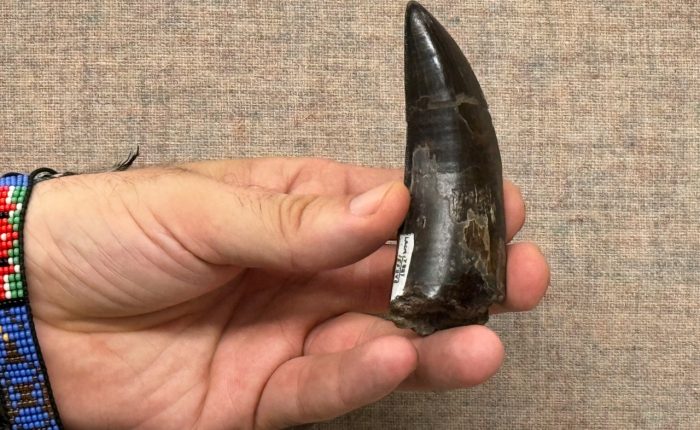
The fearsome predator Tyrannosaurus rex had a body temperature of about 97 degrees Fahrenheit, according to a new study that used fossilized teeth to settle a long-running question. The reading, drawn from three teeth, came in close to the average body temperature of modern humans and within the range seen in modern elephants.
Researchers once thought dinosaurs were sluggish, cold-blooded creatures. Later findings challenged that view, suggesting older dinosaurs were warm-blooded and could control their body temperature.
Most scientists agree that T. rex was warm-blooded, but pinning down the exact core temperature of an extinct animal is difficult.
“We can’t just use a thermometer to do that,” said Jasmina Wiemann, a paleobiologist at Johns Hopkins University who had no role in the latest work.
Scientists tried other methods, including studying how T. rex grew and searching for clues in its bones, but a firm number eluded them.
In the new study, researchers hunted for chemical clues in the predator’s teeth. Atoms within tooth enamel clump together in different patterns based on an animal’s body temperature.
“We figured out how warm the most famous animal of all, a T. rex, was,” said co-author Aradhna Tripati, a geochemist at the University of California, Los Angeles.
The findings were published Wednesday in the journal Science Advances.
“I almost would have expected a higher body temperature,” Wiemann said. Based on her prior work, she thought the predator could have run a few degrees hotter, similar to modern birds, dinosaurs’ warm-blooded descendants.
Knowing how hot or cold T. rex was can help scientists piece together how the dinosaur might have lived.
At 97 degrees Fahrenheit, T. rex could have lived across most of prehistoric North America, Tripati said, maintaining a stable internal temperature across both cooler and hotter regions. The findings could also shed light on the kinds of prey the dinosaur had to hunt to keep its energy up.
Scientists say it will be important to test the methods on other dinosaurs to see how warm or cold they ran. It is possible T. rex’s temperature could have been one of the keys to its dominance as one of the dinosaur age’s top predators.
“There’s lots of interesting, charismatic species that could be explored using this,” said study co-author Robert Eagle, a geobiologist at UCLA.