US capital punishment debate reignites over botched execution and planned livestream
Nidal Malik Hasan faces a planned military firing-squad execution at Fort Hood on Dec. 3 under Defense Department plans. The scheduled death broadcast has reignited a nationwide debate over capital punishment methods and transparency across the country.
Defense Secretary Pete Hegseth announced Thursday that the military would broadcast Hasan’s execution. Vice President JD Vance questioned whether it would happen on Friday and said he would not watch. Retiring North Carolina Republican U.S. Sen. Thom Tillis called the broadcast plan “beyond disgusting.”
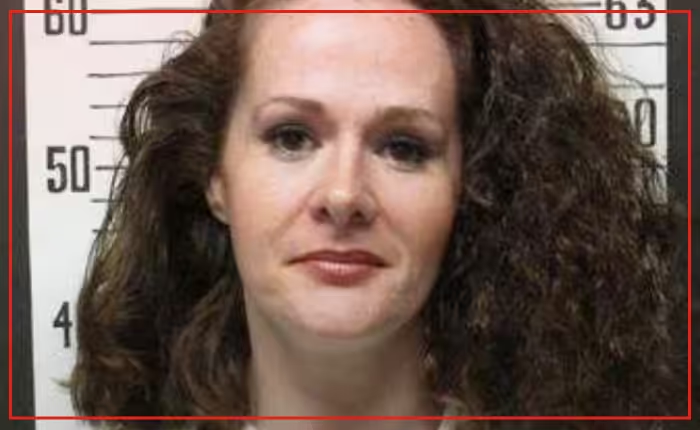
The announcement followed an Oct. 1 botched lethal injection in Tennessee involving death row inmate Christa Pike. Pike survived the execution attempt. Tennessee lawmakers contemplated returning to the electric chair or allowing firing squads. Pike was convicted in 1996 of killing classmate Colleen Slemmer, whose family supported the execution.
Military Plans and Public Execution History
The U.S. has executed 30 inmates this year. Another eight executions are scheduled, mostly in Texas and Florida. Ten states have abolished capital punishment since the late 1990s peak. Nearly half of all states ban capital punishment outright.
Executions were often public from the American Revolution into the 20th century. No public executions have occurred since the late 1930s.
Brenner Fissell, vice president of the National Institute of Military Justice, called public executions grotesque. He noted almost every European nation has abolished capital punishment. Fissell said he knew of no legal obstacles prohibiting the broadcast.
“You don’t have a right to a secret death.”
New York Law School professor emeritus Robert Blecker said making executions public forces government accountability. Blecker argued ancient Hebrews and Greeks believed failing to punish criminals polluted the population.
“Shouldn’t the people have access to what’s being done in their name? If we can’t stomach and can’t tolerate it, then abolish it.”
Faith Leaders and State Lawmakers React
Idaho recently made the firing squad its primary execution method. Idaho state Republican Rep. Bruce Skaug introduced that measure. Skaug called the Pentagon broadcast plan difficult to swallow. Skaug said:
“That’s a difficult one for me to swallow.”
A July Pew Research Center poll found about two-thirds of U.S. adults view capital punishment as morally justified for murder. About 6 in 10 say it does not deter crime. About 7 in 10 see some risk of putting an innocent person to death.
Gallup polling trends show support has fallen considerably since the 1990s. Presbyterian pastor Rachel Sutphin opposed the broadcast. Her father was killed on duty as a Virginia sheriff’s deputy. Virginia executed the killer in 2017 before abolishing the death penalty in 2021.
Hegseth belongs to a church denomination co-founded by pastor Doug Wilson, who supports capital punishment. The Southern Baptist Convention and the Lutheran Church-Missouri Synod also support capital punishment based on biblical retribution. Major groups like the U.S. Conference of Catholic Bishops officially oppose the death penalty.
Archbishop Paul S. Coakley condemned the Fort Hood broadcast plan on Friday. Coakley serves as president of the U.S. Conference of Catholic Bishops.
“This decision is a barbaric promotion of a culture of death and must be reconsidered.”
Military capital punishment cases follow the Uniform Code of Military Justice. The process requires presidential approval before the armed forces can carry out any death sentence. Condemned military prisoners are held in specialized disciplinary facilities pending final orders.
Religious opponents continue organizing prayer vigils and letter-writing campaigns for death row inmates across the country.