Las Vegas facility treats, releases defendants deemed incompetent
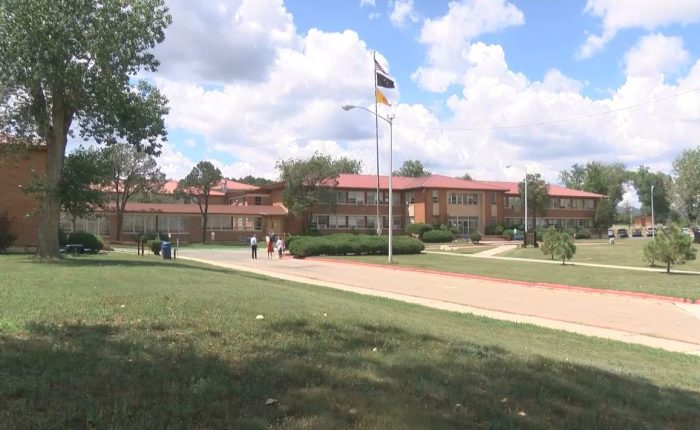
A behavioral health facility in Las Vegas, N.M. treats defendants whom courts have found incompetent to stand trial, with most returning to competency within about six months. The New Mexico Behavioral Health Institute houses a forensic division that takes in those defendants from every county in the state, according to the facility’s executive director.
Dr. Tim Shields, executive director of the BHI, said the forensic unit serves people court-ordered into treatment. “So these are individuals that have been alleged to have committed a crime, and then they go and they speak with their defense attorney, and they can’t assist their defense attorney in their defense,” Shields said.
Attorneys raise the question of competency. If a judge finds a defendant incompetent to stand trial and dangerous, the court can order that person to BHI for treatment aimed at restoring competency. The largest share of referrals come from Albuquerque, Shields said, because it is the biggest city.
Once admitted, staff work on the underlying conditions. “We treat them like they’re human. A lot of times in the community, everyone runs away from people who are responding to internal stimuli or they try to avoid it. We don’t. We go up to them, we talk to them, we make them feel safe,” Shields said.
Shields said 80% of defendants sent to BHI are treated back to competency to stand trial, usually within the first six months. “There are a lot of good community programs in New Mexico,” Shields said. “But that tends to be where we need more help when we discharge someone from here , are we sure that they’re going to have a safe place to stay? Are we sure that that place is going to make sure they go to their appointments, that they’re going to take their medication?”
KC Quirk, a social work unit director with the Albuquerque Law Office of the Public Defender, questioned whether the process works. “I would say not so much,” Quirk said. “Whether or not somebody can meet the criteria to be found competent to stand trial , is completely different from whether or not that person’s wellness is being attended to.”
The state hospital sits on a 300-acre property in Las Vegas and has been at that location since 1889, when it was known as the state’s “Territory Insane Asylum.” It is overseen by the New Mexico Department of Health and operates five divisions: community-based services; CARE, the Center for Adolescent Relationship Exploration, serving 13- to 17-year-olds; an adult psychiatric division for civil commitments; Meadows, a long-term care facility; and the forensic division. The BHI employs nearly 600 staff members across its campus.
For those released, Bernalillo County’s mental health court offers a diversion program. District Court Judges Lucy Solimon and Bruce Fox preside over the docket, where attorneys can refer defendants as part of a plea agreement, or a judge can order it as a condition of release. “The most success I see here in district court is when you are providing people with the resources that they need to change their behavior, get the medication they need, to give them stable housing, address substance abuse,” Solimon said. “And reach a point where they can have a stable life and not re-offend.”
Treatment through mental health court is voluntary, and the judges said a person must be self-motivated. “We’ve really tried to get people to open up, talk, get the team members to provide advice,” Fox said. “It is really a collaborative effort.”
Civil commitment, where a doctor can sign off to involuntarily commit a person with behavioral health issues to treatment, exists but is rarely used. “It gets a little complicated because you’re talking about civil rights and taking away somebody’s freedom, basically,” Fox said.
Quirk pointed to the history. “The reason that our civil commitment standards are where they are today is because that civil commitment process was misused and people were abused,” Quirk said. “And back in the 80s and 90s, there was this massive deinstitutionalization thing that happened in our mental health facilities, right? But we didn’t create safety nets.”
Shields pushed back against the public perception of the forensic population. “Statistically speaking, individuals with serious and persistent behavioral health conditions are much more likely to be victims of crimes than they are to be perpetrators of crimes,” he said. “The more we can kind of repeat that and let people know that this is a good population to work with, they need support, they need to be treated well. With that, you see some really great results.”
The state legislature approved $68 million to replace the old forensic unit in Las Vegas, increasing the hospital’s capacity. The new unit is expected to open in 2026.