Hyundai’s Pleos Connect to reach 20 million vehicles by 2030
Hyundai Motor Group has begun rolling out its Pleos Connect software platform in Korea and plans to expand the system to about 20 million Hyundai, Kia and Genesis vehicles by 2030, positioning the technology as a central feature across its global lineup. The scale of that target transforms what the company describes as a software-defined vehicle from a single product launch into a long-term strategy for how drivers interact with their cars after purchase.
Pleos Connect is designed around the idea that a vehicle’s digital functions can continue to change after the car leaves the factory. Functions can arrive through over-the-air updates, applications can be added, navigation can use live connected data, and the voice assistant can become more capable over time. Historically, a new car’s technology was largely frozen on the day it was sold; a five-year-old vehicle rarely gained meaningful new abilities, according to Hyundai’s framing.
The system’s voice assistant, called Gleo AI, uses a large-language-model-based design intended to understand context and natural conversation. During a demonstration by the company, a passenger could ask the system to find a place to eat, follow with “take me there,” and have the assistant recognize that “there” referred to the earlier result. The system can also handle multiple requests, answer questions about weather or the vehicle itself, and identify which seat a speaker is in to operate features such as heated seats.
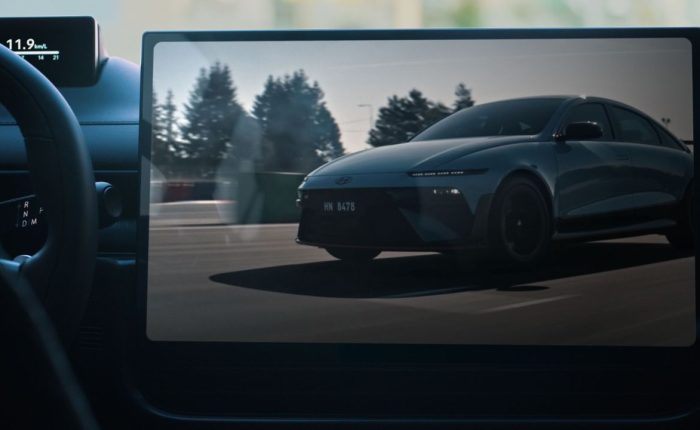
Hyundai has retained physical controls for frequently used functions including climate and audio. Driving information such as speed, range and warnings remains separated from app content on the main display, while navigation, audio and other applications share the screen. Drivers can expand one application or divide the screen between two, and a three-finger gesture can move or close app windows. While the vehicle is moving, the full AI conversation is not presented on the display, though critical driving and navigation information remains available.
The platform’s App Market includes services such as YouTube, Spotify and NAVER, with other categories expected to expand. Pleos Connect is built on Android Automotive and runs directly on vehicle hardware. Hyundai has created a development environment called Pleos Playground that gives outside developers software tools, emulators and access to approved vehicle interfaces so they can create applications distributed through the App Market.
Navigation can use live traffic information from connected vehicles and other sources to adjust routing. For electric vehicles, route planning can consider battery level, destination and journey conditions, then determine whether a charging stop is needed.
Hyundai has not fully detailed how every Pleos service will be priced in every market, which features might require subscriptions, how functions will vary among Hyundai, Kia and Genesis, or how much data individual applications and AI services will use. Genesis has confirmed Pleos Connect for the 2028 GV90, which Genesis USA says is due to arrive in early 2027. It is not yet established which Hyundai-brand model will introduce Pleos in the United States, nor whether the GV90 will be the first Group product to offer the system there.
App licensing, data services, privacy rules, cellular connectivity and available voice functions can change from one market to another, meaning a feature demonstrated in Korea should not automatically be treated as a promise for every U.S. vehicle.