Birmingham church opens visitor center on bombing anniversary
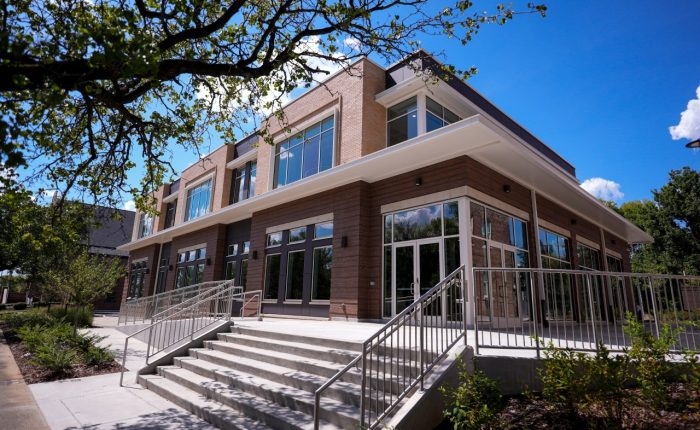
The 16th Street Baptist Church in Birmingham, Alabama, opened a new visitors center on Tuesday, the 63rd anniversary of the Ku Klux Klan bombing that killed four Black girls. Church leaders said the center is meant to educate visitors about the 1963 attack and push for continued work on civil rights.
Hundreds of people filled the church for the annual memorial service. Bryan Stevenson, the founder of the Equal Justice Initiative and the event’s guest speaker, said the remembrance comes as politicians try to remove content from museums, attack the Voting Rights Act and turn to division.
“We’re in a critical moment in America. There is a narrative struggle. There are people who are preaching the politics of fear and anger, and they want to govern through fear and anger,” Stevenson said.
Stevenson, who helped build memorials and museums tracing the legacy of slavery in America, said a “whole network of elected officials,” not only the Klan, shared responsibility for the climate that led to the bombing. “And today we have those same voices, and we have to stand against those voices by being committed to truth and justice,” Stevenson said.
The visitors center has space for exhibits, oral history initiatives, artist residencies, community quilting projects, public speaker series and other programming. The church sits within the National Park Service’s civil rights monument in Birmingham, but it runs the visitors center independently.
The center’s opening follows uncertainty about how history is presented in national parks and museums. President Donald Trump in March 2025 signed an executive order aimed at defunding museum exhibits and programs that he said promote “divisive narratives.”
The Rev. Arthur Price Jr., the pastor of 16th Street Baptist, said he wants visitors to leave with a clear message. “I want them to take away that history is not just in the past. History is also present, and that there’s still work to do,” Price said. “When we talk about the challenges in our country, when we talk about the injustice, the inequity, and the inequality, there’s still a whole lot of work for us to do.”
Lisa McNair, whose sister Denise was among the four girls killed, said the history must be remembered. “It’s part of our shared American history, and if we don’t know our history, we’re destined to repeat it,” McNair said.
Klansmen placed a bundle of dynamite outside the church under a set of stairs. The bombing came during the height of the Civil Rights Movement, eight months after then-Gov. George Wallace pledged “segregation forever.” The dynamite exploded at 10:22 a.m. on Sept. 15, 1963, killing 11-year-old Denise McNair and Cynthia Wesley, Carole Robertson and Addie Mae Collins, all 14. A fifth girl, Sarah Collins Rudolph, the sister of Addie Mae, was severely injured but survived.
Three Ku Klux Klansmen were eventually convicted in the blast: Robert Chambliss in 1977, Thomas Blanton in 2001, and Bobby Frank Cherry in 2002.