New Mexico attorney held in contempt for AI brief errors
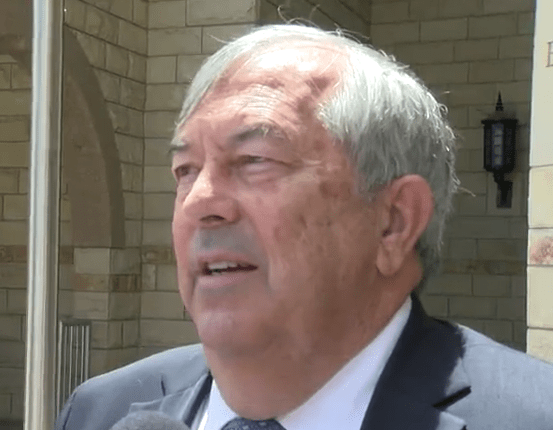
A New Mexico attorney has been held in contempt of court after using artificial intelligence to draft a legal brief that included fabricated witness testimony. The New Mexico Supreme Court found Stephen Aarons in contempt, removed him from a murder appeal and ordered him to pay a $5,000 fine.
Aarons admitted to justices that he “assumed” ChatGPT would generate a “bulletproof summary of proceedings.”
“It’s of little comfort to know that my stupidity is what brings us together this afternoon,” Aarons said as he began his arguments before the court.
He told the court he made a mistake. “I didn’t check the transcript against the summary of proceedings; that’s where my error was,” Aarons said.
Aarons said ChatGPT generated false testimony from fabricated witnesses, and he submitted the appeal to the court in a Las Cruces man’s murder case.
“It’s the duty of the lawyer to confirm the facts of the law,” said Justice David K. Thomson.
The case marked the New Mexico Supreme Court’s first dealing with this type of issue. Justices rejected any arguments Aarons made on his own behalf during the hearing.
“Do you watch the news? Do you listen to the radio? Do you read anything about what’s going on in the world? Because the problem with lawyers relying on AI and hallucinations is an above-the-fold story. Every single day,” said Justice C. Shannon Bacon.
The court also criticized Aarons for not telling his client about the mistake and for failing to answer justices’ questions about how he should be disciplined.
“So either you buried your head in the sand, and that’s a choice to do that, an intentional choice to be uninformed, or you took a gamble. And neither of those are consistent with the code of conduct,” Bacon said.
Aarons is also facing an investigation before the Supreme Court’s Disciplinary Board.
In a statement, Aarons said:
I am cooperating with the disciplinary board and will accept the consequences of my error. In March 2025 I agreed to handle an appeal and used ChatGPT to summarize the trial proceedings. I wrote the brief but the table of contents and the summary contained numerous errors. At the time, I didn’t know that AI could hallucinate facts not only in my brief but also in pleadings submitted by other attorneys in other cases. I support the court’s decision to throw out my defective pleading and appoint another attorney to write a new brief. The most important thing is for my former client to get a fair hearing despite my mistake.