Payton Gendron on trial in fatal Buffalo supermarket shooting case
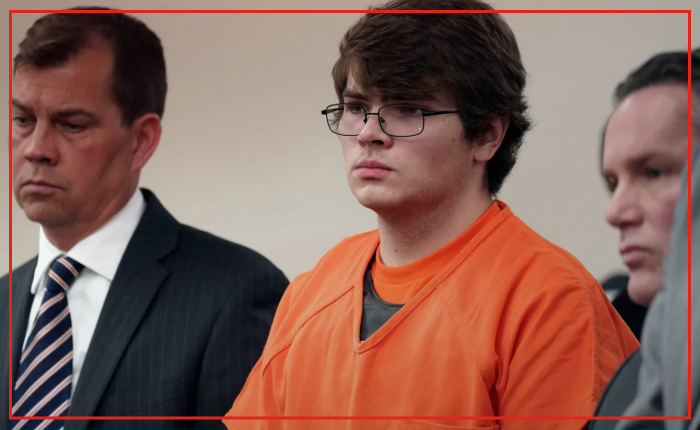
Payton Gendron faces jury selection Tuesday in a federal death penalty trial in Buffalo. The court process will decide whether the convicted killer receives capital punishment. The legal proceeding follows a fatal 2022 mass shooting at Tops Friendly Market.
Gendron faces over two dozen federal hate crime charges. He also faces more than a dozen firearms charges. He already serves life in prison after pleading guilty to state murder charges in 2023.
His defense team will not dispute his guilt. Their sole objective is to spare him from execution.
Nothing will change the fact that Payton Gendron will die in prison. At trial, we will offer mitigating evidence about Payton that the jury needs to consider in making its decision. Nothing we say or do is intended to be disrespectful or insensitive to the victims, the survivors, or their loved ones.
The federal public defender office released that statement before the proceedings. Gendron offered to plead guilty in exchange for a life sentence. The U.S. Justice Department rejected that proposal.
Under President Joe Biden, the Justice Department decided in 2024 to pursue a death sentence. It was the first capital case overseen by then-Attorney General Merrick Garland.
Family members of victims hold differing views about capital punishment. Wayne Jones lost his mother, Celestine Chaney, during the attack.
Jones said he does not want to see the gunman sentenced to death.
I really think that he should just sit and have to think about it year after year after year and just be miserable. When I was younger, I probably was more prone to say ‘kill him.’ But, at this point, I mean, he’s still got well another 20-30 years of appeals.
Buffalo Common Council member Zeneta Everhart took a different position. Her son, Zaire, survived the shooting and is now 25.
Ten people died that day in an egregious way and in an awful, terrible, traumatic way.
Everhart said hate crime enhancements might serve as a deterrent. She called the violence domestic terrorism.
It is important we go after the death penalty in this case. But if he doesn’t end up getting it, I know that justice will be served.
On May 14, 2022, Gendron drove over 200 miles from his home in Conklin to Buffalo. He fired around 60 shots from a semiautomatic rifle at shoppers and employees. Video showed he apologized to a white store worker after shooting him in the leg.
Gendron surrendered to police outside the supermarket. The 10 people who were killed were all Black and ranged in age from 32 to 86. The victims were:
- Celestine Chaney
- Roberta Drury
- Andre Mackneil
- Katherine Massey
- Margus Morrison
- Heyward Patterson
- Aaron Salter
- Geraldine Talley
- Ruth Whitfield
- Pearl Young
Salter was a retired Buffalo police officer working as a security guard. Patterson was a church deacon. Three other people survived their injuries.
Investigators found social media posts and writings where Gendron planned the assault. His stated goal was frightening non-white and non-Christian people into leaving the country. He also promoted the great replacement theory.
Brian Levin is a hate crime analyst with the California Association of Human Relations Organizations. He noted that Black people remain the primary target in FBI bias data.
Unfortunately, he (Gendron) fits the pattern of young, mostly white males undertaking targeted massacres which are then justified by manifestos, which are also part of a continuing chain that references prior attacks often but seeks to encourage future ones.
Federal law enforcement agencies reported over 2,800 anti-Black hate crime incidents in 2025. That count was nearly three times the number targeting Latinos. Total hate crime incidents declined 7% from 2024 to 2025.
Garnell Whitfield lost his 86-year-old mother, Ruth, in the Buffalo massacre. He expressed no personal preference regarding capital punishment.
This is the federal government doing what they deem they have to do.
Whitfield hopes trial testimony reveals details about radicalization and societal causes behind the violence.
Federal capital trials require a separate sentencing phase if a jury finds the defendant eligible for execution. Jurors must weigh aggravating factors presented by prosecutors against mitigating evidence offered by the defense. The process demands a unanimous vote from the jury to impose a death sentence.
Jury selection in the federal case will proceed this week in western New York.