Paris conference to rally support for Lebanon’s cash-strapped army
The heads of state of Lebanon, France and Jordan will meet Thursday in Paris to drum up support for the struggling Lebanese military. The meeting is part of efforts to prepare a donor conference for Lebanon’s cash-strapped army, which has long relied on international funding.
A donor conference for the military was initially set for February, led by France, Saudi Arabia and the United States. It was postponed after the eruption of the Iran war and the latest round of the Israel-Hezbollah war.
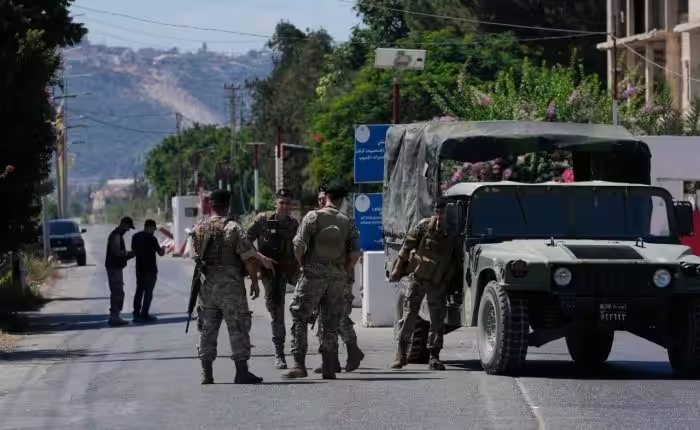
The Lebanese army has found itself caught between the Israeli military, now occupying much of southern Lebanon, and Hezbollah. The militant group has refused calls to give up its weapons.
In June, the Lebanese and Israeli governments announced a framework agreement under which Israel would withdraw gradually from southern Lebanon and the Lebanese army would assume control, while Hezbollah would be disarmed. Implementation of the deal has stalled.
Lebanese President Joseph Aoun’s office said the Paris meeting will center on preparing the ground for a donor conference. It will also focus on the situation in southern Lebanon and plans for an international presence after the mandate of the U.N. peacekeeping force known as UNIFIL expires at the end of the year.
Hezbollah was severely weakened in the last war, which ended in November 2024. Lebanon subsequently elected Aoun and Prime Minister Nawaf Salam, who committed to disarming Hezbollah and other non-state armed groups in the country.
Lebanon has been criticized by Israel and the United States for not taking direct military action to force the militant group to disarm. Lebanese officials are wary of a confrontation between the army and Hezbollah, fearing it could spiral into a civil war.
The government has insisted it needs a larger and better-equipped military to deploy across Lebanon and win over Hezbollah’s supporters who question the army’s ability to protect them. The small Mediterranean country’s military is underfunded and underequipped, for years relying heavily on international donors, notably the United States, United Kingdom, France and Italy.
Saudi Arabia had initially earmarked $3 billion in 2013 to support the Lebanese army with French weapons. Saudi Arabia decided to halt the aid in 2016 as Hezbollah grew in power politically and the Lebanese government’s ties with the kingdom deteriorated.
Many soldiers had left the military or worked second jobs since the country’s fiscal crisis in late 2019, which affected state institutions that once provided decent salaries and benefits and locked the savings of millions in the banks. The military has struggled to adequately pay salaries as inflation soars and state budgets shrink.